How to Build Child's Confidence: It Starts With Physical Challenge
There's a moment every parent knows. Your kid eyes the monkey bars. Hesitates. Tries. Falls. Tries again. And then — they make it across.
That moment isn't just play. That's how to build child's confidence. And the research behind it is more compelling than most parents realize.
What Self-Confidence Actually Is (And Where It Comes From)

Psychologist Albert Bandura spent decades studying why some people push through challenges while others give up. His answer wasn't talent or intelligence. It was self-efficacy: a person's deep belief in their own ability to succeed.
Self-efficacy — real confidence — isn't something kids are born with. It's built. And according to Bandura's research, mastery experiences have repeatedly been found to be the strongest source of self-efficacy — and the tasks themselves need to be sufficiently challenging to create a sense of accomplishment, because tasks that require little effort do not raise self-efficacy.
That means monkey bars, for kids who learn to keep going, are building the same mental muscle they'll use to push through a hard test or a difficult season years from now. Children's beliefs in their efficacy account for variance in academic performance even after controlling for level of skill development — and perceived efficacy to regulate learning activities and master academic subjects raises academic aspirations and final grades independently of prior grades.
Because the body doesn't lie. When an individual experiences mastery, dopamine releases as goals are set and achieved — self-efficacy is neuroscience-based. When a child does something hard with their body and succeeds, they feel capable in a way that no amount of praise can replicate.
Why Making Everything Easy Backfires

One of the most counterproductive things parents do — with the best intentions — is removing every obstacle. Modern childhood has become extraordinarily comfortable. And that comfort, while well-meant, quietly robs kids of the experiences that build real confidence.
Research shows there are indications of negative effects from children being overly protected: curbing risky play and autonomy may increase the likelihood of anxiety, both in childhood and into adolescence and adulthood.
Restricting risky play may contribute to higher anxiety levels, poorer self-regulation, and limited social problem-solving skills. The absence of opportunities to practice managing fear and uncertainty in childhood can make it harder for children to cope with emotional challenges later on.
The goal isn't to make life harder for the sake of it. The goal is appropriate challenge: the kind that stretches kids just enough, in a safe environment, where they can try, fail, and try again without consequence.
A 2025 position statement found that activities like climbing, rough-and-tumble play, and exploring unfamiliar terrain help children develop confidence, risk perception, and problem-solving skills — and researchers also warned that overly safe and heavily supervised play environments may actually contribute to increased anxiety in young people.
The backyard, designed well, is one of the most powerful developmental environments you can build.
SwingSesh: Confidence Infrastructure in Your Backyard

SwingSesh was designed around this idea. We call it confidence infrastructure — a structure where physical challenge lives right in the middle of everyday family life, accessible any afternoon without scheduling or commuting.
The monkey bars for kids that feel impossible in week one feel easy by week six. The dead hang that shook their arms builds into a controlled swing. The box jump they were scared to jump on becomes the thing they show off to friends. Every single one of those moments is wiring your child's brain with a belief that will outlast the backyard: I am someone who does hard things.
That's not a metaphor. "Increased self-confidence and reduced anxiety are two of the biggest emotional benefits. When children try something they think they can't do — but find out they can — it changes how they view themselves." Self-efficacy is literally constructed from accumulated evidence of past success. SwingSesh is the mechanism for generating that evidence, daily.
Learn how you will also be building healthy habits.
Where to Start with SwingSesh
If you're looking for a place to start, browse the full playsets with monkey bars collection to find the right fit for your family. Two of our most popular options are the SpartanSesh Cube — a compact, versatile rig built for progressive challenge — and the Monkey Bar Double Rig, purpose-built for the kind of upper-body work that builds real strength and confidence over time.
Have more questions? Here is everything you need to know about monkey bars.
What Your Kids Can Build in 90 Days
From an early age, the possibility to experience several opportunities for unstructured play — in which the child can decide what to do, with whom, and how — promotes positive self-esteem, autonomy, and confidence.
Children with strong self-efficacy are more engaged in learning and willing to take on more challenging tasks. They adjust more easily to new situations and recover more quickly from setbacks. That's not something you can schedule into a class or download from an app. It comes from doing hard things, repeatedly, in your own backyard.
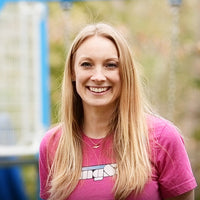
That look is self-efficacy forming in real time.
Give your kids a place to build real confidence.
See the SwingSesh lineup — built for the kind of physical challenge that shapes resilient, confident kids.
Learn more about How to Build Child's Confidence:
- Bandura self-efficacy / mastery experiences: simplypsychology.org/self-efficacy.html and mindbrained.org
- Self-efficacy and academic performance (Bandura): homepages.se.edu (Bandura PDF)
- Dopamine/mastery neuroscience: scholarworks.calstate.edu
- Risky play quotes (Kuhn/Rasmussen): rasmussen.edu/benefits-of-risky-play
- Overly protected children / anxiety research: child-encyclopedia.com and curiousneuron.com
- 2025 position statement / risky play: parentherald.com
- Unstructured play and confidence (PMC): pmc.ncbi.nlm.nih.gov/articles/PMC6806863
- Self-efficacy and setback recovery (cccframework.org): cccframework.org/building-self-efficacy